How to Teach Freedom Mapping
Year-long course or individual units of instruction
Because K-12 Ethnic Studies classrooms operate in a number of contexts, the resources for the Freedom Mapping Project were designed to be as flexible as possible.
Teachers have the option of using content from this project in two ways:
- As a year-long Ethnic Studies Course
Using the course materials this way allows educators to construct a multiple semester course in which the content is scaffolded, and moves toward producing a well-developed summative project by the end of a school year. - As discrete, individual units of instruction
Using the unit materials this way allows teachers to develop course content that serves school communities that are limited by time or their context. Teaching one or two units in the Freedom mapping project will still engage students with essential understandings and foundational theory in Ethnic Studies.

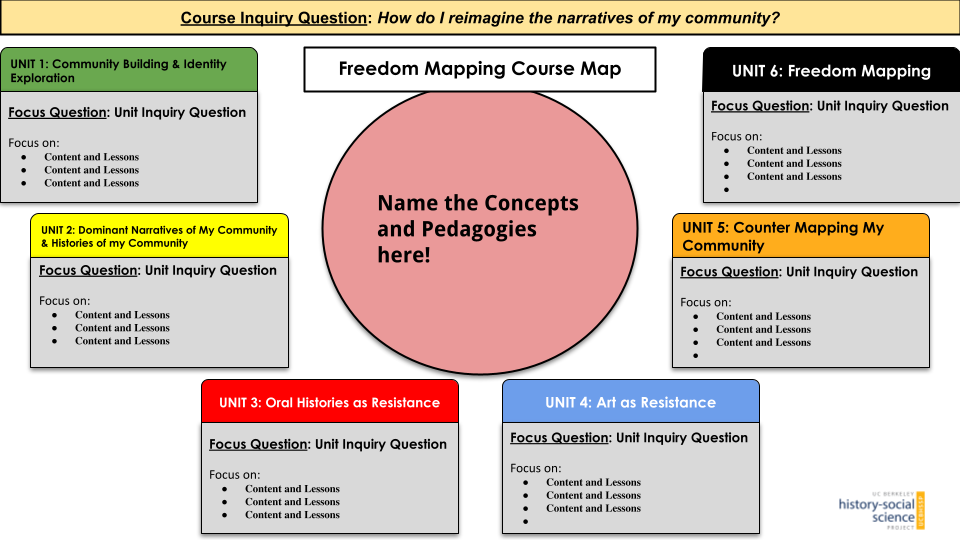
Freedom Mapping Units
| Units | Description |
|---|---|
| 1. My Identity | In this unit, students explore the topics of identity, intersectionality, and structural challenges. |
| 2. Understanding Dominant Views About My Community | In this unit, students explore dominant views that outsiders might hold about the community, and analyze data related to issues impacting the community, such as environmental concerns, housing, and inclusive spaces. |
| 3. Using Stories to Resist Dominant Views About My Community | In this unit, students learn about community stories and local history in order to unearth counter-narratives that highlight the ways dominant narratives about the school’s community have been, and are being, resisted. |
| 4. Using Art to Resist Dominant Views About My Community | In this unit, students analyze art and personal expression and how it has been, and is being, used to resist dominant views about the school’s community. |
| 5. Counter Mapping for My Community | In this unit, students will create counter maps that showcase how their community’s cultural wealth-through art, oral histories, and local stories-intersects with challenges like housing and environmental issues. By mapping these narratives, students will highlight and elevate the often-overlooked voices in their community. |
| 6. Freedom Dreaming for My Community | The course culminates with a project that challenges students to “Freedom Dream” a vision for their community that articulates their hopes and aspirations for themselves and their neighbors. |